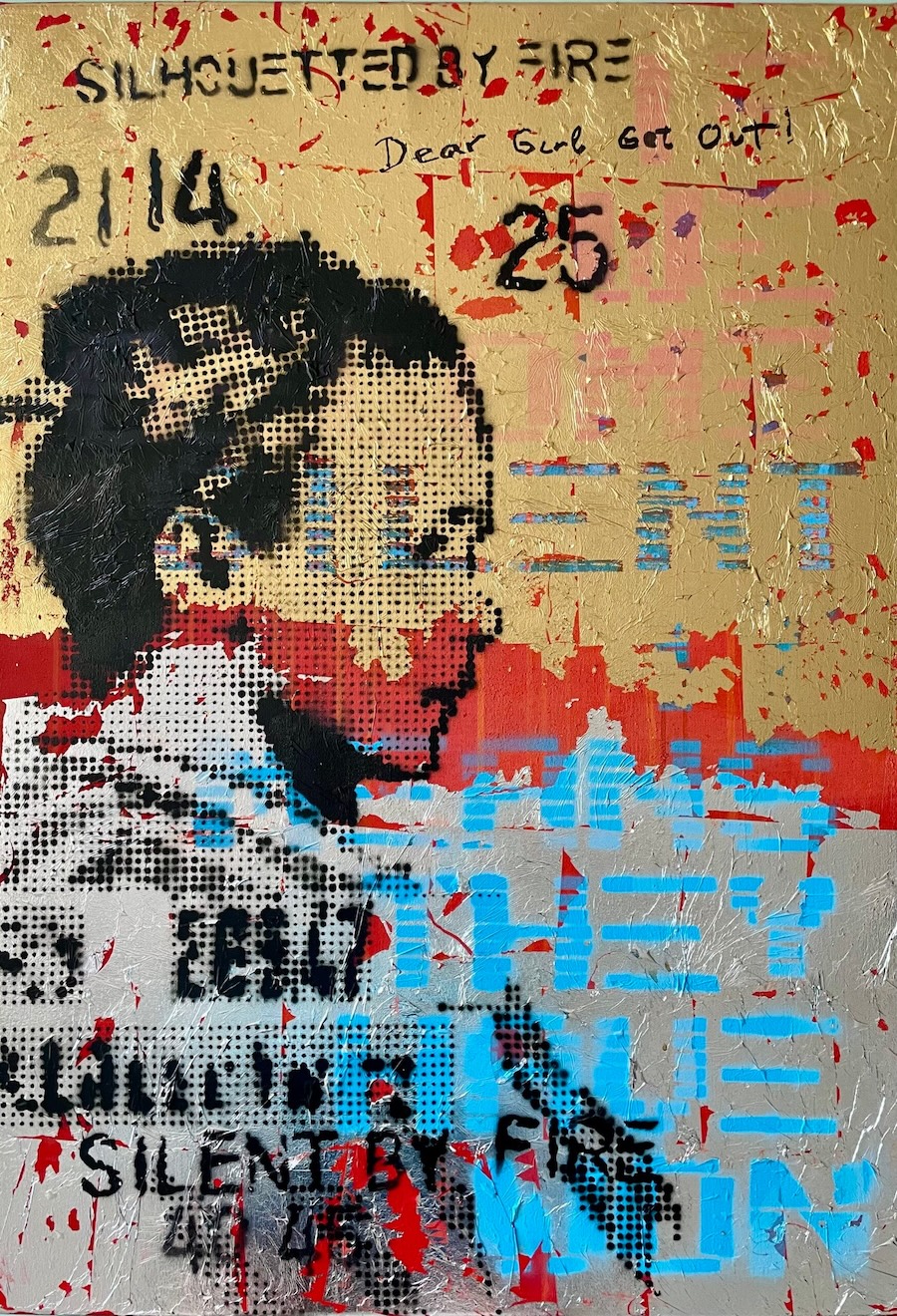
Silhouetted by Fire is a 2024 mixed-media collage painting by Borna Libertines that bridges historical trauma with contemporary suffering through halftone portraiture, gold and silver leaf, and activist text. This 70×100cm canvas work, priced at $3,200, serves as a visual manifesto against silence in the face of genocide, creating a sacred space for remembrance and critical dialogue.
2025 · Street Art
Silhouetted by Fire
"Silhouetted by Fire" stands as a profound mixed-media composition that bridges historical trauma with contemporary suffering through powerful visual testimony. The painting features a central portrait rendered in halftone dot pattern technique, creating a newspaper-like photographic quality that immediately evokes themes of documentation and witness bearing. This stencil-inspired approach, reminiscent of street art and protest graphics, transforms the subject into both an individual story and a universal symbol of resistance. The composition employs a dramatic red and orange background with cascading dripping paint effects, creating an atmosphere of urgent destruction and flowing grief. These dripping techniques suggest both the immediacy of trauma and the passage of time, as paint flows like tears, blood, or the very fires that consumed countless lives. Silver and golden leaf elements are strategically integrated throughout the work, serving as powerful metaphorical representations of fire - both destructive flame and transformative illumination. The bold textual element "If we become silent, it means they have won" commands attention, creating a rallying cry that transforms the artwork from memorial into manifesto. This phrase, combined with layered historical references spanning from Auschwitz 1940-1945 to Gaza 2025, creates a palimpsest effect where different eras of systematic violence overlap and intersect, demanding recognition of recurring patterns of human cruelty and genocide.
Artistic Style
The painting employs a hybrid contemporary documentary style that synthesizes multiple artistic movements and techniques:
Street Art and Activist Aesthetics
- Halftone stencil portraiture creating newspaper-like documentation effects that reference both protest graphics and memorial photography
- Layered textual elements functioning as both visual components and activist slogans, typical of wheat-paste poster campaigns and resistance art
- Urban weathered aesthetic with distressed surfaces that suggest both the passage of time and the urgency of immediate action
Neo-Expressionist Trauma Representation
- Gestural dripping paint technique conveying raw emotional intensity and psychological turmoil through controlled chaos
- Bold color contrasts between warm destruction (red/orange) and precious metals (silver/gold) create visual and symbolic tension
- Mixed media integration combining traditional painting with metallic elements to create textural complexity
Documentary Memorial Art
- Testimonial photography references through halftone printing effects that preserve individual identity within universal suffering
- Archive-like quality that functions as both artistic expression and historical documentation
- Contemporary memorial functionality similar to Holocaust memorials and war monuments, but updated for current conflicts
Political Conceptual Art
- Text-image integration where words become visual elements carrying equal weight with imagery
- Historical appropriation and recontextualization connecting past atrocities with present conflicts
- Comparative genocide methodology using visual parallels to illuminate recurring patterns of violence
What This Artwork Evokes
- This piece creates a profound sense of historical consciousness coupled with moral urgency. It evokes:
- Empathy and active remembrance for victims across different genocides and conflicts, refusing to let their stories fade into historical abstraction
- A call to resistance against cycles of violence and the complicity of silence in the face of atrocity
- Cross-generational solidarity between survivors of different traumas, creating bridges of understanding across time and geography * Contemplative activism that moves beyond passive mourning toward engaged action and witness
It serves as
- :
- A catalyst for difficult conversations about historical memory, contemporary conflicts, and moral responsibility
- An educational anchor that makes abstract historical concepts viscerally immediate and personally relevant
- A memorial presence that honors victims while challenging viewers to prevent future atrocities through active engagement
- A psychological bridge connecting personal trauma with collective memory, offering pathways for healing through acknowledgment
How It Enhances a Space
When displayed, this artwork transforms any environment into a sacred space for critical dialogue and remembrance.
Righteous Anger and Moral Outrage
. The dramatic color palette and urgent textual elements convey justified fury at systems that perpetuate violence against civilians810. The dripping paint suggests both literal fire and metaphorical burning anger at injustice, while the bold declaration against silence transforms rage into productive resistance.
Profound Grief and Historical Mourning
The artwork channels deep sorrow for lives cut short by systematic violence, particularly focusing on young victims whose stories demand telling. The portrait technique humanizes statistics, making individual tragedy visible and memorable while honoring both the 14-year-old Polish girl at Auschwitz and the contemporary Gaza victim.
Cross-Temporal Solidarity and Connection
A powerful sense emerges of standing in solidarity with victims across time and geography, serving as a witness when direct testimony becomes impossible. The parallel structure creates bridges between historical and contemporary suffering, suggesting that remembrance of past atrocities can inform present action.
Urgent Call to Action and Resistance
The phrase "If we become silent, it means they have won" creates immediate emotional tension that compels viewers to consider their own role in preventing future tragedies. This urgency transforms the artwork from a passive memorial into an active catalyst for engagement and change.
Contemplative Reverence and Sacred Memory
The memorial quality of the work invites quiet reflection and respect, creating sacred space for processing difficult historical truths while maintaining dignity for victims. The careful craftsmanship and artistic beauty suggest that creative expression can transform suffering into meaningful memory.
Hope Through Artistic Resistance
Despite its tragic subject matter, the very existence of the artwork demonstrates that creative expression can serve as a form of resistance and survival. The integration of precious metals (silver and gold) alongside destruction suggests transformation and the enduring value of human life and memory.
Educational Urgency and Historical Consciousness
The work creates a sense of responsibility for learning from history and educating others, transforming viewers into potential advocates for human rights and genocide prevention. The documentary aesthetic reinforces the importance of bearing witness and preserving testimonies for future generations. This powerful artwork serves not merely as an aesthetic object but as a catalyst for crucial conversations about human rights, historical memory, and collective responsibility to prevent future atrocities. Through its synthesis of street art aesthetics, memorial functionality, and political activism, "Silhouetted by Fire" creates a unique space where art becomes both witness and call to action.