

Japanese Contemporary Art & Streetwear: From Yayoi Kusama to Takashi Murakam
A story like this finds its home among Borna Libertines readers – where brushstrokes meet hoodies, where pixels shape taste. This script opens a door, not a whole room, just enough light to see Murakami’s roots in alleyways and glitch screens. A beginning hides inside every frame, not a full picture, never complete. Culture moves sideways here, sliding between galleries and phone feeds without asking permission.
A glow spreads across wide open spaces, where dots and colors twist like thoughts that never stop. One artist fills every inch with repetition, another mixes childlike figures with deep city rhythms. Their work meets in a place without edges, shaped by machines yet deeply human. Patterns pulse slowly, almost breathing under electric light. Faces appear inside flowers, smiling in code. What feels chaotic holds careful balance beneath. Neither dreams nor reality fully claim this space – it exists between.
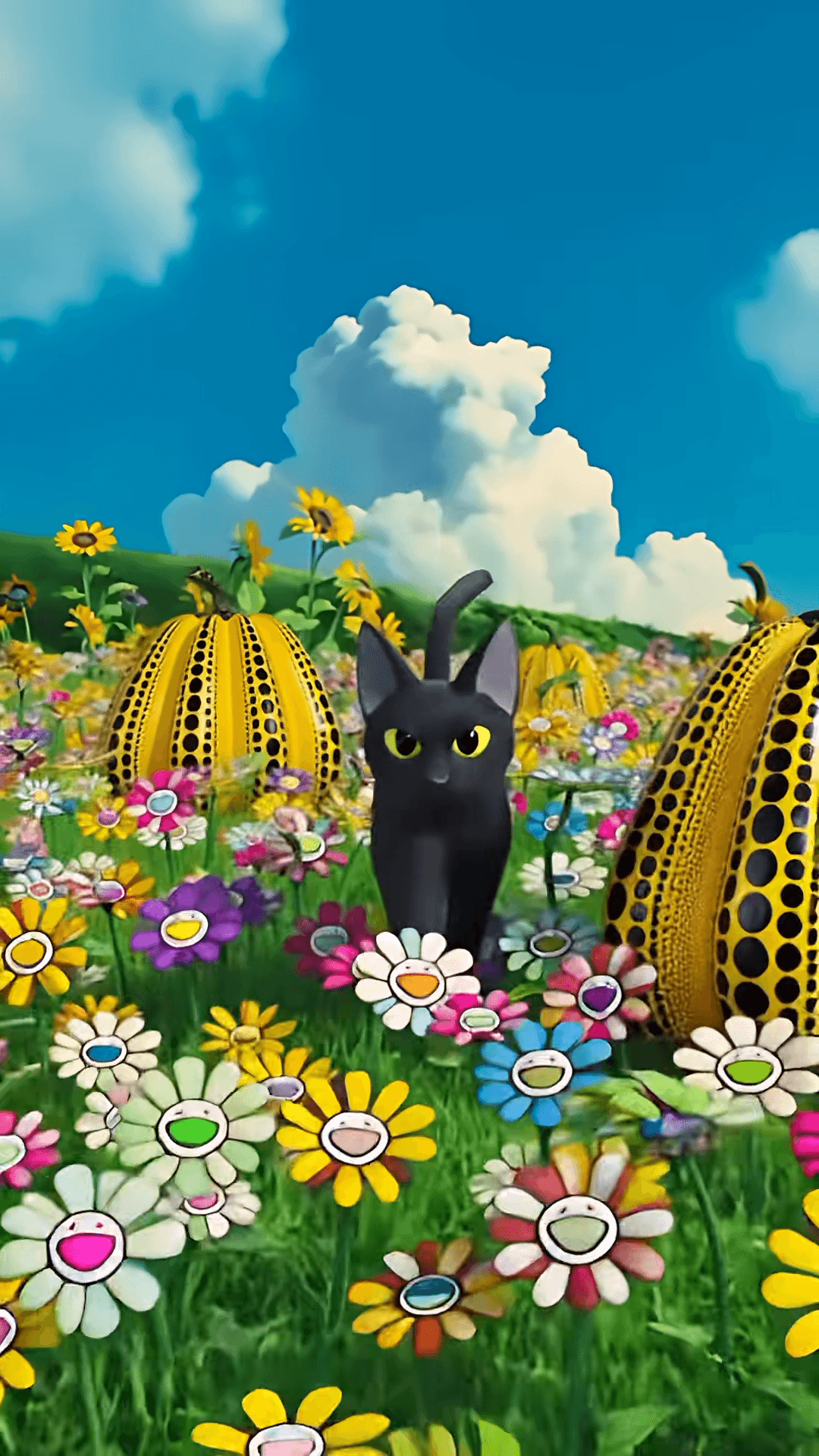
A dream runs loose where gravity forgets its job. Through bright green grass walks one small cat, quiet, curious. Not real flowers grow here – these shout with color, twist into wide smiles, their petals like electric candy. From that glowing ground push up round shapes, fat and spotted, standing guard without eyes. Those forms? Pumpkins shaped by obsession, each dot placed with silent intent. Murakami’s madness colors air. Kusama’s rhythm hums under soil.
A sudden burst of color in your newest clip isn’t merely wild visuals. One artist crashes into another here, both reshaping how global eyes see Japanese creation. The moment hums with legacy and clash. What lies beneath marks on your screen begins with those who drew them. Each shape has a hand, each color a voice. These are people behind what you see.
Yayoi Kusama and Her Endless Polka Dots
Out there among frames, a pumpkin takes shape. These three aren’t carved for Halloween – they carry pieces of someone’s stubborn spirit. She started seeing them long ago, back when she was small, growing up in Japan before war changed everything. Now past ninety, Kusama still draws them like memories that refuse to fade.
Out in fields where seeds took root, pumpkins stood out to Kusama. Their bumpy shapes felt familiar, somehow calming. A childhood spent near soil and sprouting plants drew her close to these humble vegetables. Not sleek or perfect, yet full of quiet strength. With time, they came to mean steadiness, simplicity, even peace. Once, she shared how their quirky shape brings a smile, warmth settles in just looking at them, almost like meeting an old friend.
Look closely. Pumpkins aren’t painted flat – they’re packed with dots. That choice ties to Kusama’s idea called “Self-Obliteration.” When dots swarm over something – even her own body – it fades, blurs, dissolves. The pattern turns objects into parts of a larger whole. Life doesn’t stop, just spreads.
Inside Kusama’s art, space bends like thought. Vision slips where real ends and dream begins. A pumpkin appears – solid, round, quiet – not lost but found amid endless repetition. This shape holds ground while everything else floats away.
Takashi Murakami and the World of Superflat

Out there, where your cat strolls, those blooms might be Murakami’s grinning petals. They seem cheerful, bright – like something from a toy ad. Yet take another step forward. A smile can hide more than joy. Behind Murakami’s bright petals lies a flattened world – no gap between galleries and toy stores, masterpieces and posters. Those wide-open blossoms? Not just cheerful. They echo something deeper. A nation once shattered learned to wear brightness like armor. After ash fell from the sky, cheerfulness became quiet necessity. Grinning blooms mirror faces trained to please. What looks playful might really be grief smoothed over. Culture reshaped itself into sweet surfaces. Beneath them lingers weight that never fully lifts.
Art shows up on sidewalks now. Not just galleries. That shift? Murakami pushed it hard. Instead of keeping work behind glass, he sent it into stores, onto boards, through music videos. Luxury brands opened doors – Louis Vuitton first. Then street names like Supreme followed. Even pop stars wore his visions. Billie Eilish didn’t just sing. She carried his world on her jacket. What once hung quiet in museums began moving with people. Jackets, bags, decks – they turned into canvases. Collecting art used to mean frames and walls. Now it means limited drops and long lines. His touch blurred where painting ended and lifestyle began.
A world shaped by flat colors might catch their eye. When dots meet chaos, something clicks. Think of art where old scrolls whisper through cartoon eyes. Bright layers stack like city lights at midnight. Instead of depth, there’s rhythm – patterned, loud, deliberate. Picture silk screens dancing with graffiti tags. Youth culture crashes into temple walls. Not every line behaves. Some artists paint like they’re remixing a video game soundtrack. Aesthetic roots dig deep, yet feel light, fast, and disposable. Tradition gets zipped into neon jackets. Look closely – there’s mischief in the details.
The Collision of Styles
Next up, take a look at these three creators. One follows after another, each bringing something distinct. Their work stands apart, yet fits together somehow.
Yoshitomo Nara: The Vibe – Rebellious, Punk, Emotional
A brushstroke here feels raw, alive – Nara’s hand leaves traces you can almost touch. Unlike Murakami’s sleek pixels, these shapes drip emotion straight from the canvas. One moment it’s a childlike face, oversized and staring; next, there’s a blade resting near her fingers. Smoke curls off a cigarette she never lights, just holds like a secret. Sometimes music sneaks in – a guitar propped beside her, silent but ready. Each figure stands still, yet something about them won’t stay quiet.
Here’s why it works: Think of Murakami as the mind behind Superflat, while Nara brings emotion. Staring out with big eyes, his figures seem sweet at first glance – yet something deeper lingers underneath. Loneliness lives there. So does quiet rage. That mix hits right at home in streetwear’s sad-boy rebel vibe.
KAWS (Brian Donnelly): The Vibe – Subversive, Commercial, Iconic
Strange how a U.S.-born artist feels more at home in Tokyo’s creative pulse – that is where KAWS first stepped into toys, thanks to Bounty Hunter. Those slumped Companion statues, eyes shut tight with crosses, echo something familiar, yet stand apart like Murakami’s blooms do on the other side of the world.
What makes it click: Much like Murakami, KAWS blurred the gap – one moment a fifty-dollar vinyl figure, next a five-million-dollar artwork. From NYC street tags to Japanese pop visuals, he moves across worlds without pausing.
Aya Takano: The Vibe – Sci-Fi, Ethereal, Feminine
Drifting through dreamy scenes that blur fantasy and future, Takano crafts delicate characters suspended mid-air. These ghostly forms appear weightless, carried by quiet moments inside strange worlds shaped like visions from another dimension. Part of Murakami’s Kaikai Kiki group, her work lives where imagination bends without warning.
Strange how it clicks. The art swirls with a half-awake vibe, pulled straight from a comic strip melting into steam. That drift echoes right through your footage.
A dream floats between screens. That clip of a cat strolling past Murakami blooms, then Kusama’s spotted gourds? It lives where today’s online creation breathes – built from pieces borrowed, shifted, reimagined. Not new. Not old. Something else entirely. A single cat changes everything. Not in a museum, but online, where images move fast. Inside strange digital scenes, fur real and eyes glowing, it feels oddly familiar. Through tiny screens we step into endless spaces. Moments last only seconds, yet they stretch far beyond. Ordinary now lives inside the impossible.
References
- Benesse Art Site – Murakami
- Blue Vagabond – Kusama Hype
- Instagram – Cat Stroll
- Fun Japan – Japanese Artists
- Chosun – Market Money
- Public Delivery – Kusama Pumpkins
- Korea Times – Frieze 2025
- Artsper – Japanese Artists
- Russell Collection – Yoshitomo Nara
- Hi-Fructose – Kusama Immersive
- Masterworks – Kusama Motif
- Russell Collection – Murakami
- Artsy – Giants of Japanese Art
- Jenna Research – Murakami & Nara
- MoMA Catalogue
- Guy Hepner – Kusama Guide
- Galerie Raphael – Murakami
- Tokyo Weekender – Contemporary Japan
- SCMP – KAWS Collectors
- QAGOMA Collection
Leave a Reply