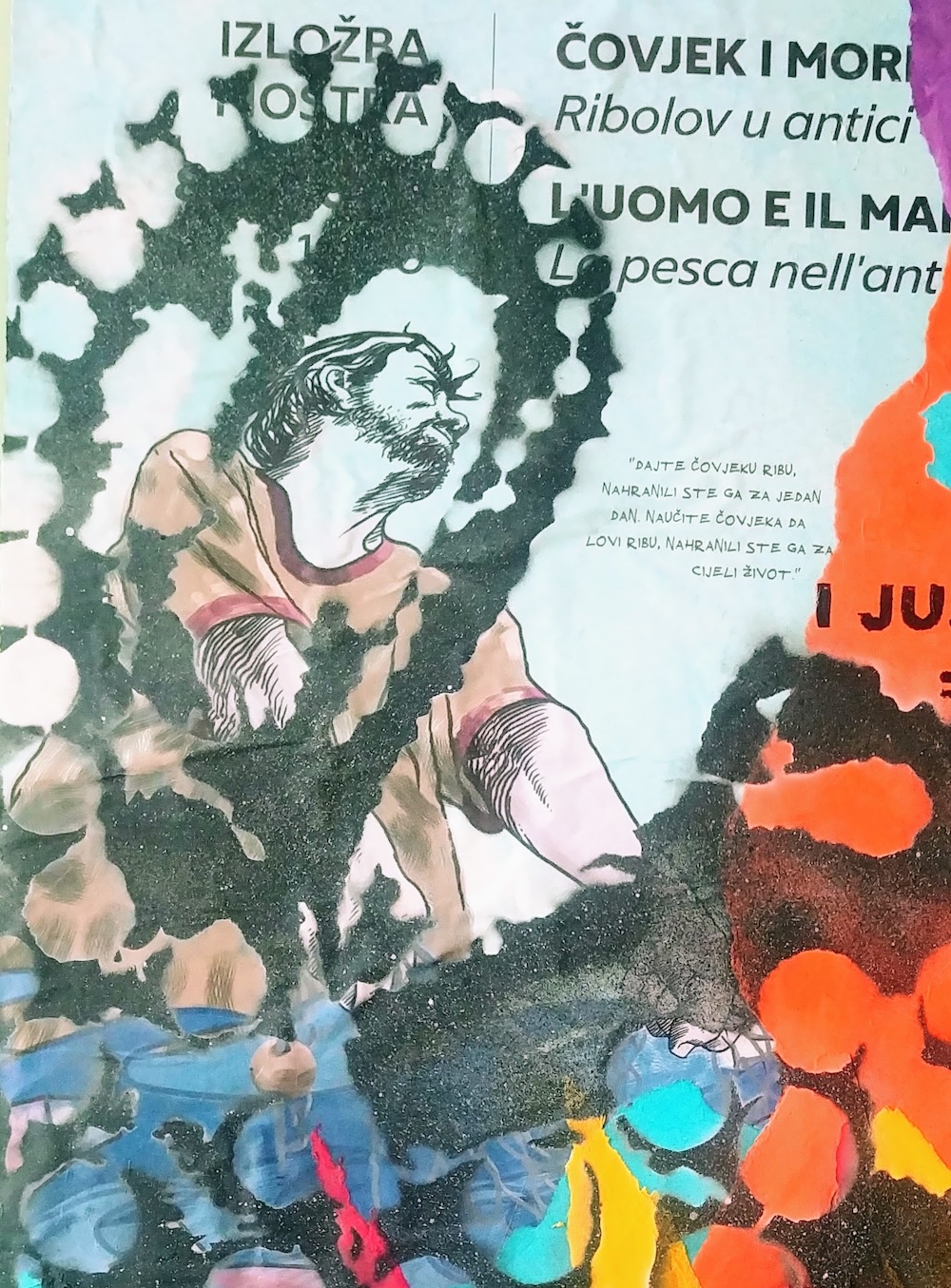
Man and the Sea by Borna Libertines is a 2024 collage on cardboard that explores introspection, mental wellness, and the weight of depression. A contemplative figure, an octopus, and the text "I just need a break from being awake" create a powerful statement on the necessity of rest. 70×100cm. Contact for price.
2024 · Street Art
Man and the Sea
"Man and the Sea" features a dynamic blend of bold, overlapping color splashes and vintage print fragments. The figure of a contemplative man in the upper-left corner pairs with evocative typography that reads, "It's not that I'm tired; I just need a break from being awake." The bright reds, yellows, and blues are set against torn layers of text, creating a dramatic contrast and a sense of layered depth.
The octopus represents the weight that man pulls out of the sea—a powerful metaphor for the internal struggles that emerge from within. Just as an octopus dwells in ocean depths, so too does depression dwell in the depths of the psyche, exerting a heavy pull downward. The octopus functions as a visual embodiment of mental burden, loss, and the weight of introspection.
What truly stands out is the tension between the calm, introspective figure and the vibrant swirls of color. This juxtaposition energizes a space with a sense of creativity and inspiration, while also reminding the viewer of the importance of reflection and self-care. Its large, eye-catching color fields serve as a bold statement piece in modern interiors, while its introspective message sparks conversation and meaningful dialogue about mental wellness.
Visual Style & Medium
This piece can be described as contemporary mixed-media collage that merges elements of pop art, abstract expressionism, and surreal text-based design. The layering of printed text and painterly splashes gives it a collage-like sensibility, while the vivid colors and fluid shapes hint at abstract expressionism. The inclusion of bold typography and figurative sketch suggests pop-art influences, creating a hybrid aesthetic that speaks to contemporary visual culture.
Compositional Elements
- Contemplative man figure in monochrome tones anchoring the composition and providing human reference
- Bold color splashes in bright reds, yellows, and blues creating visual dynamism and emotional intensity
- Octopus imagery functioning as both decorative and metaphorical element representing psychological weight
- Layered text and vintage print fragments adding historical depth and literary dimension
- Strategic contrast between cool monochrome figure and warm vibrant field creates visual and emotional tension
The Central Text
"It's not that I'm tired; I just need a break from being awake" operates on multiple levels—both as literal artistic statement and as profound commentary on burnout, exhaustion, and the human need for respite. The language suggests not laziness but rather honest acknowledgment of the limits of consciousness and the necessity of psychological rest. This phrase becomes the emotional core around which all visual elements orbit.
Cultural References
- Text elements referencing "Čovjek i More" / "L'uomo e il Mare" (Man and the Sea in Croatian/Italian) connecting the work to European cultural and literary traditions
- Vintage paper fragments suggesting historical layering and palimpsest of human experience
- Traditional fishing and maritime imagery grounding the work in timeless human-nature relationship
Reflection & Contemplation
The figure's thoughtful pose and the text referencing a need for rest underscore a deeply introspective mood. Rather than depicting action or movement, the work privileges stillness, thought, and the inner life. It honors the value of contemplation in an age obsessed with productivity and constant engagement.
Contrast & Duality
Bold colors versus the monochrome figure create visual and emotional tension that mirrors the human experience—external vibrancy concealing internal struggle, or conversely, internal richness expressed through superficial containment. The octopus emerging from the sea represents the surfacing of hidden psychological forces that demand acknowledgment.
Resilience & The Need for Rest
The statement "It's not that I'm tired; I just need a break from being awake" evokes the universal desire to find pause in a hectic world—not as weakness but as necessary recalibration. The work validates the human need for respite and reframes rest not as failure but as essential self-care and survival mechanism.
Connection to Nature & Tradition
References to the sea and ancient fishing offer a sense of timelessness and grounding, tying modern life to enduring natural and cultural roots. The sea becomes both literal space and psychological metaphor—a boundary between consciousness and the unconscious, between the known and the mysterious depths within.
Mental Wellness & Depression
The octopus represents not merely weight but specifically the experience of depression—that force which emerges from psychological depths and exerts a heavy, downward pull. By visualizing this struggle, the artwork transforms invisible mental illness into visible, shareable human experience, reducing shame and fostering connection.
Energizing Spaces with Introspective Depth
This artwork simultaneously livens up a room with its striking palette while inviting moments of pause and introspection. The vibrant colors command attention and energize the space, while the contemplative figure and introspective text encourage viewers to slow down and engage with deeper questions about rest, resilience, and mental health.
Sparking Conversation
The bold imagery and direct textual statement make this work conversation-starting—ideal for communal or living spaces where meaningful dialogue can emerge. Viewers are invited to share their own experiences of exhaustion, the need for rest, and the ongoing struggle to balance engagement with preservation of self.
Validation & Representation
For those experiencing depression, burnout, or the weight of modern life, this artwork offers validation and representation. It says: your struggle is seen, your need for rest is legitimate, and you are not alone in feeling the weight that pulls from within. This representational power transforms the work into a form of artistic healing.
A Statement Piece for the Contemporary Home
In modern interiors, "Man and the Sea" functions as both aesthetic object and philosophical anchor. Its large color fields make bold design statements, while its introspective content ensures that viewers never experience it as merely decorative. It is a conversation between art and viewer about what it means to live authentically in contemporary times.
Emotional Resonance & Timelessness
Despite its contemporary aesthetic, the work speaks to timeless human struggles with exhaustion, meaning-making, and the balance between action and rest. The octopus, the sea, the references to European tradition—all these elements root the work in something larger than current moment, suggesting that these struggles are ancient, universal, and worthy of artistic meditation and cultural attention.